BLOG
Glazunov's symphonies - a master orchestrator at the mercy of his time
Mar 29, 2025
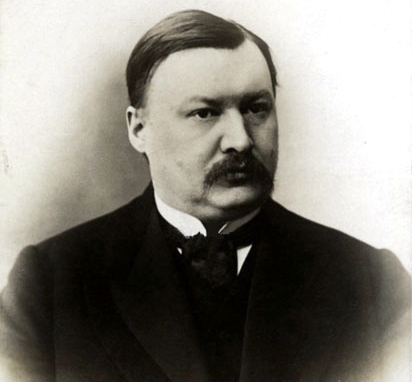
What is so annoying about Aleksandr Glazunov's symphonies is that their reputation has changed so much in different places and times: at the end of the 19th century, he was hailed as a "master of the future" in Russia, in the first half of the 20th century he was treated as a "guardian of tradition," and then he was dismissed as "stale and redundant" when he turned a corner. Once it had come full circle, it was dismissed as "old-fashioned and redundant. In recent years, however, music fans have been asking, "No, no, it's not so bad if you listen to it carefully. It's not so bad if you listen to it carefully," and music fans are now re-evaluating it as if they were dusting it off from the back shelf. It is as if they were wearing their grandfather's old suit that was left behind in his parents' house, but now they are wearing it as if it were vintage.
So why is Glazunov's reputation so shaken? It is probably because it is difficult to know where he stands. His music has the glittering orchestration of Rimsky-Korsakov, but the emotionally charged drama of Tchaikovsky's music is restrained, while the Brahms-like drama of Brahms's music is not. Even so, he strives for a Brahms-like beauty of composition, but it just can't seem to boil down to anything. It is as if the music is a sophisticated and chic suit on the outside, but the back side of the seams are rumpled.
The pros and cons of the sense of composition - it's like an incomplete puzzle.
Take, for example, the Fifth Symphony. The introduction begins solemnly, making you think that something grand is about to unfold. However, when the first theme comes out, the dignified mood goes away, and the melody is like a pleasant country gentleman saying, "Well, well, well, have a drink. The subsequent development tends to be a bit scattered, as if the composer himself is wondering, "Well, what did I want to say here? It even seems as if the composer himself was wondering, "Well, what did I want to say here?
This can be said of Glazunov's symphonies in general; it is fine to fill them with various elements, but it is undeniable that he wrote them without considering the point where the story should be dropped. His attempt to fuse Russian romanticism with German-style composition leaves the impression of an "incomplete puzzle. If his symphony had been a literary work, he might have been in the position of an essayist who is a great writer but whose conclusions are fluffy.
Good orchestration - "the tailor's skill is first-rate."
However, whether Glazunov's symphonies are "masterpieces" or not, there is no doubt that he is a "master arranger. His orchestration technique is one of the best in Russian music, especially the way he intertwines woodwinds and strings. The flute glimpses out, the clarinet chats quietly, and the viola joins in the conversation as if to say, "I'm sorry, I'm sorry, I'm sorry. This exquisite blend of tones is like a jacket that has been meticulously tailored stitch by stitch by a fine tailor.
This talent was also fully demonstrated in the "Concerto for Alto Saxophone" in the latter years of his life. In this work, Glazunov treated the saxophone as if it were the voice of an angel and made it sound romantic. The slightly sweet, yet smooth melody is truly worthy of being called "the state of maturity. The beauty of the tone is so outstanding that it no longer matters where the symphony is headed, or how it is structured.
After all, who was Glazunov?
So is Glazunov's symphony a "masterpiece"? Or is it a "regrettable work"? The answer to this question will vary from listener to listener. But one thing is certain: he was in an "exquisite position" in the world of music. His style is traditional, but there are also hints of newness. He aims for a massive composition, but inadvertently gets lost along the way. It has a fluid orchestration, but the coherence of its content is uneven.
However, such "wanderings" and "fluctuations" may be the charm of Glazunov. If everything were perfect in this symphony, it would not have survived to the present day. However, there is something about this symphony that makes me say, "Hmmm? Maybe this is really great? and discover something new. His music is like a whiskey with a slightly different flavor. The first sip is a bit of a puzzle, but once you take the time to savor it, its complex aroma becomes habit-forming.
If you have never heard Glazunov's symphonies, you should definitely give them a try. However, I do not recommend that you immediately draw conclusions after one listen. His music is the kind that slowly takes a long time to work its way into your mind.