BLOG
Is Anton Rubinshteyn's work the best yet? Allegations of "cutting corners" and the magic of melody
Apr 8, 2025

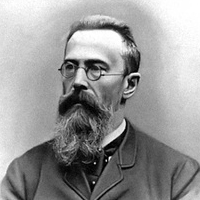
The works of Anton Rubinshtein (1829-1894) are not so frequently performed today. Although he was a major figure in Russian music and his achievements as a pianist, conductor, and educator are immeasurable, as a composer he is not as highly regarded as Tchaikovsky or Rachmaninoff. One of the reasons often pointed out for this is that the quality of his works is uneven.
In particular, listening to the third movement** of his masterpiece** "Piano Concerto No. 4" (D minor, Op. 70), one might think, "Doesn't it sound a bit lazy? I can't help but tilt my head back and think, "Isn't this a bit lazy? The first and second movements of this concerto are full of dramatic developments and passionate melodies typical of the Romanticism, and one can feel the composer's ability. However, in the third movement, the music suddenly becomes a bit flat and seems to lack the wonder of development. It is as if the composer thought, "It would be good to bring the music to the finale with great vigor here," and rushed through the music with idiomatic passages, and one cannot help but feel that the music is somehow "underdeveloped.
Let's delve a little deeper into this "suspicion of cutting corners.
Rubinshtein disregarded counterpoint?
Rubinshtein's works show little counterpoint rigor. His style seems to emphasize the beauty of melody and the richness of harmony, and he seems to have been less concerned with the dense intertwining of polyphony as in the works of Bach and Brahms. This is a characteristic shared not only by "Piano Concerto No. 4" but also by his other works.
For example, in his Piano Sonata (Op. 100), the structure is clear: the left hand basically plays the role of supporting the harmony, while the right hand plays the melody. There is little complex writing that intertwines counter-melodies, but rather a flowing pianism that suggests the influence of Chopin and Liszt comes to the fore. In other words, his music is centered on "vertical movement (harmony)," and less emphasis is placed on "horizontal movement (contrapuntal intertwining of voices).
Whether this can be called "cutting corners" is a delicate question, but at least it can be said that his compositional style emphasized the "beauty of sensuous sound" rather than "precision of structure. As a result, especially in a piece like the last movement, a writing style that "emphasizes momentum" rather than the exquisiteness of the structure stands out, and there may be moments when it seems "cheap" at times.
Still, Rubinshtein's melody is charming.
So, is Rubinshtein's work "one of a kind"? It is certainly true that Rubinshtein's works are not "good enough. Certainly, in terms of the precision of his counterpoint structure and the sense of unity of his music as a whole, his works are a step behind the great German Romantic composers (Brahms, Schumann, etc.). However, the beauty of his melodies definitely makes his music special.
For example, the second movement of "Piano Concerto No. 4" has a lyrical melody that has an emotional appeal similar to that of Liszt's works. Also, small pieces such as "Angel's Dream" (Op. 48-1), simple but deeply lyrical, are still performed today as part of the salon repertoire.
Rubinshtein's works may seem unsatisfactory if you are looking for precision in counterpoint or compositional sophistication. However, it is also true that his music has a "melodic brilliance" that more than compensates for this.
Conclusion: Whether it's "just one" or not depends on the listener.
Ultimately, whether Rubinshtein's work is "nowhere near good enough" depends on what one considers the "quality" of the composition. For listeners who value structural precision and counterpoint technique, there will certainly be times when it falls short. This feeling may be particularly strong in the third movement of "Piano Concerto No. 4," a section that seems to be less crafted.
However, for listeners who value melodic beauty and Romantic emotional expression, his works have their own charm. Rubinshtein may have been a composer who played on the brilliance of his music in the moment, rather than on its structural virtuosity.
Ultimately, how one evaluates Rubinshtein's works is left to the listener's sense of values. Whether or not even the parts that seem "lazy" can be accepted as part of his sensuous music - this may be the interesting thing about Rubinshtein as a composer.