BLOG
Scriabin's Symphony No. 1 - an underrated Romantic masterpiece
Feb 26, 2025
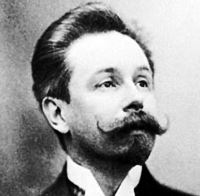
Alexander Scriabin (1872-1915) tends to attract attention for his innovative late works, such as mystical chords and tonal disintegration, but there are many gems in his early works that are in the tradition of the Romantic period but with a unique sensibility. Among them, **Symphony No. 1 (Op. 26)** is one of the most underrated and often overlooked works.
Composed in 1899, this symphony is a combination of lyricism and grandeur, despite its massive six-movement scale. However, compared to Russian symphonic works of the same period, it has not been performed as often as it is today, and its musical value has not been fully recognized. This paper explores why this symphony is underrated, and what appeal it has.
1. overview and charm of Scriabin's Symphony No. 1
◆A fusion of romantic tradition and individuality
Scriabin's Symphony No. 1 is a work influenced by his Russian predecessors such as Tchaikovsky and Rimsky=Korsakov, but also has French Impressionist sounds and Liszt's sense of harmony throughout. In particular, it is an exquisite fusion of Wagnerian chromatic progressions and Scriabin's characteristic fantasy sound.
◆The novelty of the six-movement structure
One of the most unique features of this symphony is that it is not in the usual four-movement form, but in six movements.
The first movement begins with a dreamy introduction and develops into a grand theme.
Second movement - A delicate, lyrical scherzo-like movement.
Third movement - A slow movement with a lyrical and sweet melody.
Fourth movement - Dramatic scherzo-like movement.
Fifth movement - Introduction to a festive finale.
6th movement - Climax with chorus. The grand finale is a true expression of Scriabin's artistic vision.
This six-movement structure can be said to be the germ** of Scriabin's large-scale symphonic thinking that would later lead to "Poem of Ecstasy" and "Prometheus".
◆Chorus in the last movement - Comparison with Beethoven's 9th
Especially, the chorus in the 6th movement is reminiscent of Beethoven's 9th Symphony "Ode to Joy "** and symbolizes Scriabin's own "ideal of art" that goes beyond music. The chorus sings the lyrics "Praise the Arts," which strongly expresses Scriabin's artistic philosophy. However, the final movement with chorus deviates from the general symphonic form, which is one of the reasons why the performance opportunities are limited.
2. why is the First Symphony underrated?
1) Influence of Scriabin's image as a "pianist
Scriabin is still strongly associated with the image of a composer of piano works, and his symphonic works have not received much attention. For example, his Piano Sonatas and "Poème de la Faute" are frequently performed, while his Symphony No. 1 is rarely performed.
2) Gap with "Late Works
Scriabin's reputation was enhanced by his late mystical works (e.g., Symphony No. 3 "Sacred Poems" and Symphonic Poem "Poème de la Ecce"). Compared to these innovative works, the First Symphony is based on a relatively traditional Romantic style and tends not to be considered as his masterpiece.
3) Performance hurdle of 6 movements plus chorus
The six-movement form, which differs from the usual four-movement structure, and the presence of a chorus in the last movement make it difficult to incorporate the work into a performance program. Especially, the last movement with chorus is difficult to realize unless it is performed in a large scale concert, and as a result, opportunities to perform it are limited.
3. possibility of re-evaluation and future prospects
1) Increase in Recordings and Performances
In recent years, an increasing number of conductors and orchestras have recorded Scriabin's complete symphonies, and the First Symphony is gradually showing signs of reappraisal. In particular, recordings by Valery Gergiev and Vladimir Ashkenazy have helped to spread its appeal.
The symphony with chorus is a work of great appeal.
Symphonies with chorus, such as Beethoven's 9th and Mahler's Symphony No. 2 "Resurrection," are masterpieces and are treated as special events at concerts. Scriabin's Symphony No. 1 may attract even more attention in the future as such a "symphony with a magnificent final movement.
(3) Key to understanding Scriabin's "evolution of composition
This symphony is extremely important in understanding the evolution of Scriabin's compositional style. Here, Chopin-like lyricism coexists with signs of a later move toward mysticism. Therefore, it is hoped that this symphony will be reevaluated as a clue to a deeper understanding of Scriabin's music.
4. summary - why should we listen to the 1st symphony now?
Although often overshadowed by his later works, Scriabin's Symphony No. 1 is a masterpiece that combines the Romantic tradition with Scriabin's unique and fantastic sound.
The beautiful melodies of the Romantic period and Scriabin's unique harmony are combined in this work.
Unique form of six movements
Dramatic climax in the last movement with chorus
I hope that this symphony will be more widely performed and recorded, and that the appeal of Scriabin's symphonic works will be rediscovered. Not only "Poème de la Faute" and "Prometheus," but also the First Symphony is an indispensable work for understanding Scriabin's art.