
BLOG
Classical Music as Collective Creation: Beyond the Myth of the Individual
Feb 14, 2025
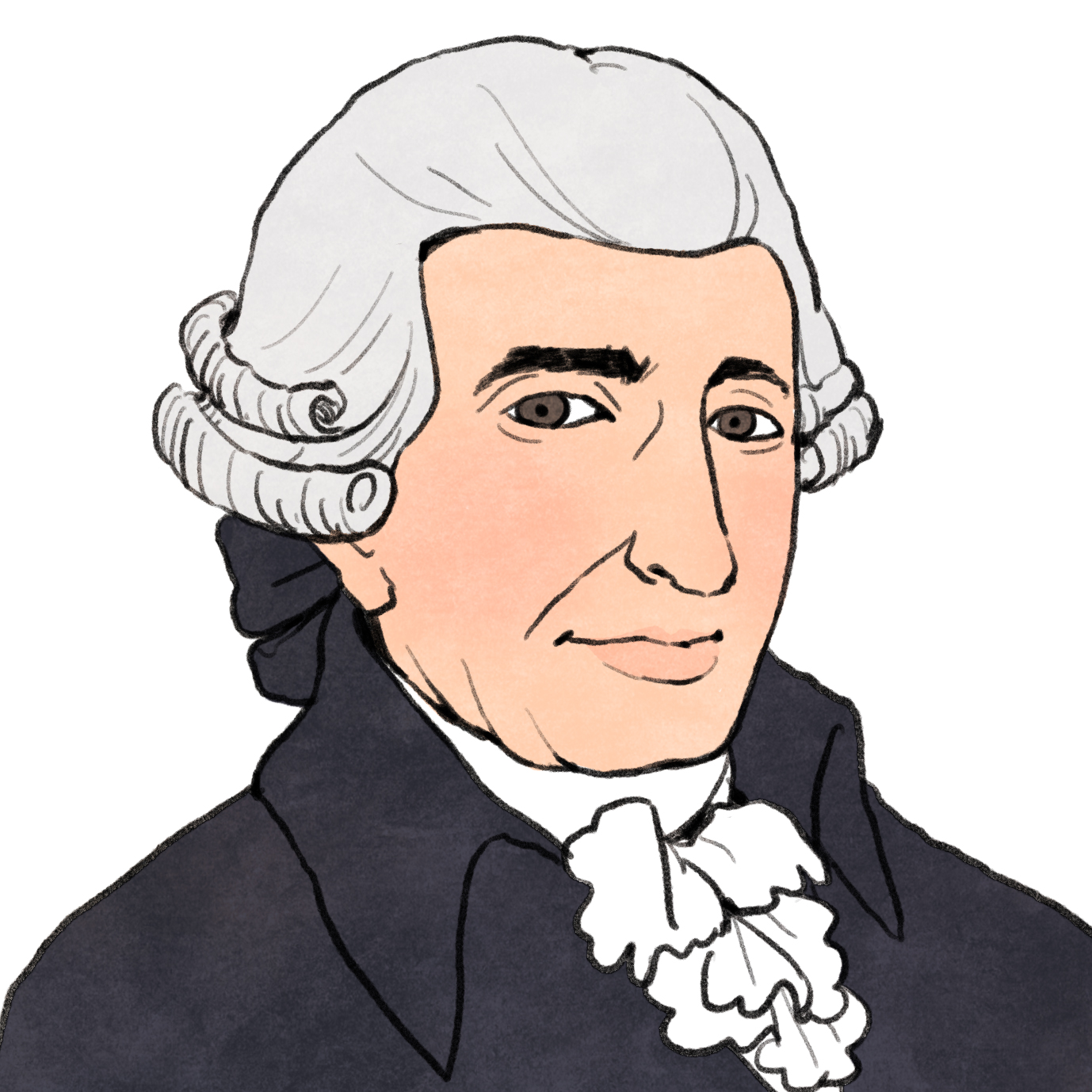
Classical music history is often told with biographies of heroic composers. Beethoven's struggles, Mozart's legendary child prodigies, Wagner's self-mythologizing. However, the creation of classical music was never completed by individual talent alone. In fact, many works were established through collective efforts, alterations, complements, or near-plagiarism.
◆The Bach Studio and its "co-creation" ◆
Johann Sebastian Bach (J.S. Bach) had many pupils and family members. It is highly likely that his sons and pupils were involved in his vast body of works, and some cantatas and keyboard works were completely co-composed within "Bach's musical workshop. For example, the "Musical Offering," BWV 1079, contains a fugue based on a theme presented by Friedrich the Great, which may have been modified by his pupils during its development.
◆"Beethoven's Tenth Symphony" and Schubert's Unfinished Symphony.
After Beethoven's death, many musicians attempted to restore the "Tenth Symphony. Joseph Joachim, Franz Liszt, and even modern AI technology have been involved in the completion of this unfinished work. Similarly, Schubert's "Unfinished Symphony" has been reconstructed in various forms by composers who have attempted to complete it since his death. The completion of such unfinished works has always involved collective creation.
◆Wagner Opera and Bayreuth co-production ◆
Although Wagner appears to be a giant, his operas were never the result of a single force alone. The influence of musicians such as his wife Cosima Wagner, conductor Hans von Bülow, and even Franz Liszt can be seen everywhere. It should not be forgotten that many financiers were involved in the establishment of the Bayreuth Festival Theatre, as well as in Wagner's own debt consolidation and political maneuvering.
◆Stravinsky and the Aesthetics of Borrowing
In the 20th century, the nature of collective creation became even more complex. Igor Stravinsky constructed a new acoustic world in "The Rite of Spring" by boldly quoting fragments of folk music. This work, created in collaboration with creators from different fields such as choreographer Vaslav Nijinsky of the Ballets Russes and artist Nikolai Lehrich, was a collective creation as a "comprehensive art" rather than an individual compositional activity.
◆Contemporary Collective Creation: Ensemble Modern and the Advancement of AI
In recent years, ensemble modern compositions have become increasingly popular. The minimal music of Steve Reich and Philip Glass has an aspect of "dynamic creative process" that includes improvisational interpretation by the performers. New horizons of human-machine co-creation are also opening up, as in the project to complete Beethoven's Tenth Symphony using AI technology.
Conclusion: Beyond Personal Legends
The creation of classical music is not only the result of individual genius, but sometimes of collective creation, supplementation, arrangement, and quotation. Just as Franz Xaver Jussmeier complemented Mozart's "Requiem" after his death, or Mahler's Symphony No. 10 was supplemented by Derrick Cook and others, the history of music has been woven not by one individual but by the collaborative efforts of creators from different periods. Facing this fact may be the key to approaching the "true creation" of classical music.

