BLOG
The evolution of DTM and the value of live recording--why do we still record guitars and drums "live"?
Apr 3, 2025
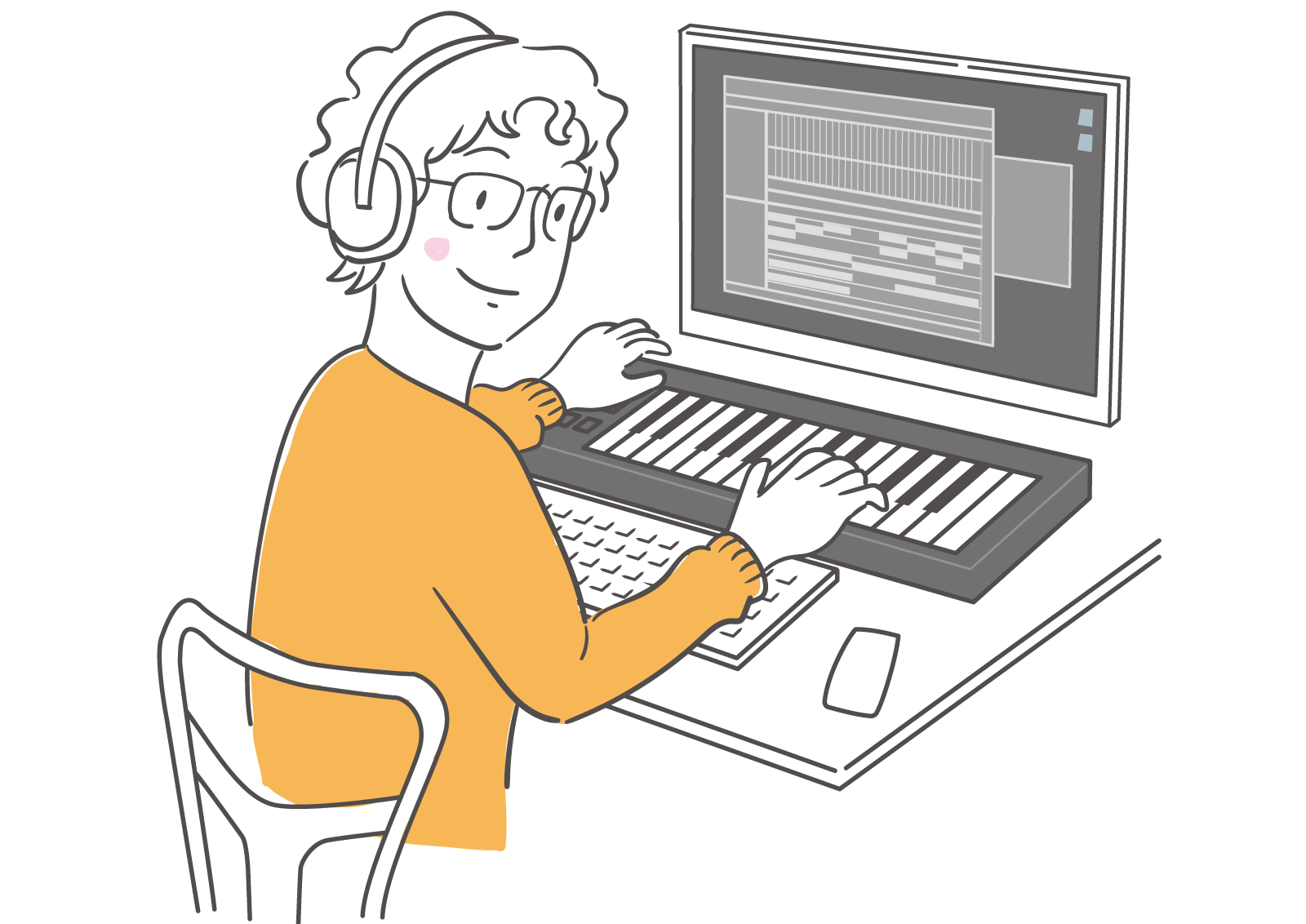
DTM (desktop music) technology has evolved dramatically, making it possible to reproduce amazingly realistic sounds for guitar and drums. Software sound sources and MIDI programming technology have made it possible to express even the smallest nuance, and it is no longer possible to say that "live performance realism cannot be achieved with hammering.
Nevertheless, many professional music producers still produce sound sources that incorporate live guitar and drum recordings. In this column, I would like to discuss "why we still record live performances" from a technical perspective.
1. limitations of guitar and drumming
Despite the evolution of DTM technology, there are still some technical challenges in hammering guitars and drums.
1) Reproduction of "overtones" and "fingering" of guitars
Guitar is not only a stringed instrument, but also has very complex elements such as the strength of picking, the degree of muting, the difference in resonance at each fret, and the legato connection by fingering.
In particular, the way overtones resonate varies subtly depending on the angle of the pick and the touch of the fingerpicking, making it difficult to reproduce completely in a program. Current guitar sound sources allow detailed settings for articulation (switching between techniques), but it is difficult to achieve a flow as natural as that of a realistic performance.
2) Difficulty in "dynamics" and "groove" of drums
While drum sound sources can create realistic sounds by layering multi-layered samples, it is difficult to reproduce a player's own groove.
Ghost notes (weak sounds) in snare and bass drums
Subtle shaking and reverberation of cymbals
Fill-in speed
It takes considerable time and effort to completely reproduce these elements in a live recording. Live recording reflects the improvisation and fluidity of the drummer's performance, creating a more "natural musical flow.
(2) "Performer's individuality" of the live performance is in the sound.
DTM typing is a good way to achieve sonic accuracy. However, "accuracy" is not the only attraction of music.
The individuality of the guitarist and drummer, which is expressed in the sound, is of great significance to the music.
For example, in blues and rock guitar solos, the phrasing and vibrato swing of each player creates a unique character. Also, in jazz and funk drumming, each drummer's subtle sense of time and groove has a significant impact.
While a "perfectly-rounded performance" can be created with a computer program, there is a limit to the amount of "human-like nuance" that can be created.
3. acoustic differences - importance of ambience
One of the greatest technical advantages of recording a live performance is "spatial ambience.
DTM guitar and drum sounds include pre-recorded ambience. However, this is only a part of the sample, and there is a limit to how naturally it can create a sense of space for the entire piece.
Live recording realistically reflects the sound of a studio or live venue, creating a three-dimensional effect in the sound. Especially with drums, the placement of microphones and the use of room microphones can greatly change the depth and power of the sound, giving it a "raw air" that is difficult to reproduce with a live recording.
Conclusion: The key is to "use" both live and recorded music.
Of course, not all music requires live sound. In modern music production, an optimal sound can be created by appropriately combining typed and live recorded sounds.
Situations in which live recording is best suited
EDM, hip-hop, and other genres that require tight rhythms
Projects that require detailed editing
Projects with budget or time constraints
Situations where live recording is best suited
Rock, jazz, blues, and other music where a human-like groove is important
Music where dynamics and expressiveness are important
When you want to make the most of spatial resonance
Incorporating DTM technology while taking advantage of "raw" quality
DTM technology has greatly expanded the freedom of music production. However, "the groove, individuality, and depth of sound that only a live performance can produce" cannot be completely reproduced by typing alone.
In future music production, it will become even more important to "utilize a hybrid of both typed and live recorded sound. I believe that more attractive music will be created by using both in the right places at the right time.