BLOG
A look into the depths of the mind of those who want to play - from the perspectives of sociology and psychiatry.
Apr 1, 2025
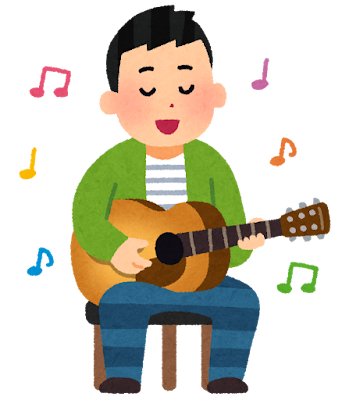
Why do people who want to play and sing choose the form of "playing and singing"? If you just want to sing, you can sing a cappella. If they want to play an instrument, they can form a band or join an orchestra. Then why do they insist on performing both "singing" and "playing" at the same time? This is not just a matter of musical preference, but a phenomenon rooted in deep social and psychological layers.
A Sociological Perspective: Narrating as "Individual Expression
From a sociological perspective, storytelling is a symbol of "extreme individualization of self-expression. Those who play music choose to complete their music alone, rather than in a collective musical activity such as a band or chorus. This choice reveals a strong desire for "complete control over one's own world.
Since the 20th century, music has become increasingly democratized, and with the development of technology, anyone can pick up an instrument, record a song, and transmit it. Especially since the 1960s, when the culture of folk music and singer-songwriters developed, storytelling as an "individual expression" has grown significantly. Artists such as Bob Dylan, Joni Mitchell, Takuro Yoshida, and Yosui Inoue chose a more direct way to deliver their stories by playing and singing their own songs instead of just singing.
The reason behind this is related to the "obsession with self-expression" in today's society: the development of social networking services has made it possible for individuals to become performers, and everyone wants "my voice to be heard. Storytelling is not just a form of music, but functions as "a means of imprinting one's presence on the world.
With so much variation, it is no wonder that it is difficult to define a "beautiful way of life. And there is an even more complicated issue regarding the way of life of musicians.
A Freudian Perspective: The Desire to "Play" and "Sing
From a psychiatric perspective, playing has an interesting psychological component. In Freudian psychoanalysis, "expressing" is an act of releasing unconscious desires. Singing is a cathartic act of externalizing one's emotions, and playing an instrument is associated with an act of "control.
In other words, playing is based on a dual structure of "emotional release" and "control. Singing releases emotion and playing an instrument controls it. This balance is what satisfies the fundamental desire of the storyteller.
Freud also classified human behavior into "es (id)," "ego," and "superego," and the playing of the instrument can be seen as a product of the struggle between these three.
The "es (id)" wants to express its emotions as they are. The urge to shout, scream, and appeal.
Ego: However, it has to be put into a form that is socially acceptable. Therefore, it must be made into music by using musical instruments.
Superego: Social and cultural norms demand perfection as a "beautiful song" or "good performance.
When these three factors are in balance, one will get the pleasant feeling of "I played it well! When these three factors are in balance, one will feel the pleasure of "I played it well!
This discussion is also a sensitive issue. This is because, on the one hand, there is the idea that "in order to continue music, one should create an environment in any way possible," while on the other hand, there is the ethical view that "musicians are also members of society and should be self-reliant. What is important here is not which side is right, but that this is one realism, a fact that cannot be avoided from a journalistic point of view.
Jungian Perspective──Playing is a Process of "Integration
According to Jungian psychology, it is important for the growth of the mind that the "anima" (feminine aspect) and "animus" (masculine aspect) within a person be balanced. Playing music can be seen as an attempt to integrate the emotional act of "singing" (anima) and the technical and logical act of "playing" (animus). This is not just a musical activity, but an act of seeking one's own inner harmony.
To sum up the minds of those who want to play...
1. strong desire for self-expression
Desire to "have one's voice heard" and "tell one's own story" in society.
2. a desire not to be buried in a group such as a band or chorus.
2. a struggle between emotional release and control
Singing brings emotions out and playing an instrument gives form to them.
In Freudian terms, it is "the act of the ego controlling the es- impulse.
3. integration of the self
From Jung's perspective, playing is "the integration of anima and animus.
An attempt to balance sensitivity and technique, passion and reason.
Conclusion: What is the "playbook" for?
In the back of the mind of those who play, there is a strong assertion that "I am here!" is a strong assertion. They prove their existence by manipulating their voice and sound at the same time. Within the framework of music, they release their emotions, control themselves, and achieve inner balance.
It is no longer a "musical technique" but rather a kind of lifestyle choice. Storytelling is not just playing an instrument and singing; it is a ritual of "establishment of the individual," a practice of "emotional control," and a process of "inner integration.
Perhaps there is something in the hearts of those who want to play and sing that they can relate to, even if they are not musicians.