BLOG
Tackling atonal music on a beginner's piano!
Mar 6, 2025
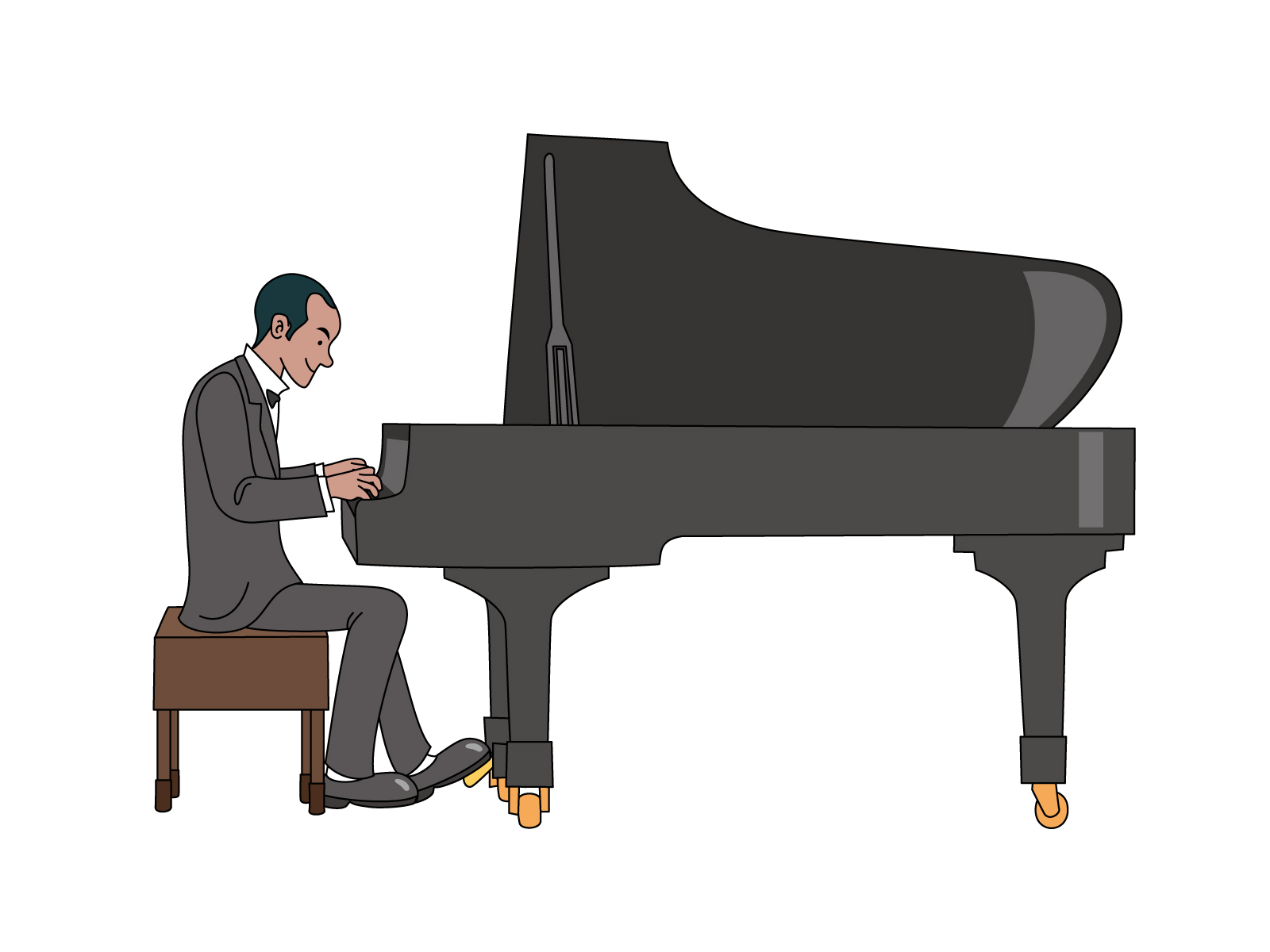
Hello to all of you who are just starting out on the piano. Usually, "For Elise" and "Twinkle, Twinkle, Star Variations" are the standard pieces for beginner piano players, but wait a minute. Do we really need rules for melody and chords in the first place?" Have you ever wondered such a question?
In fact, there is a genre of classical music called atonal music, which is regarded as **"music that the layman's eye cannot tell if it is played correctly! You can't tell if you miss a note. You don't even know if you miss a note or not. In other words, atonal music is the most comfortable music for piano beginners!
Today, let's have an experience of "freeing yourself from the spell of tonality "** by introducing "atonal piano music that even beginners can play right away".
What is atonal music? 〜The birth of "music that cannot be misinterpreted
In normal music, there is a **standard note (tonality), such as "Do Re Mi Fasolacido," and the music proceeds according to it. However, atonal music boldly breaks this rule and opens up a world where "every note played is correct! **, opening up the world of atonal music.
Ordinary music: "Do is the center. Do-miso is comfortable!
Atonal music: "You are free to choose what is the center. Depending on my mood, there is no center!"
If you start playing atonal music, you will not have to worry about the audience looking at you wondering if you are playing without mistakes. Because the listener will not know if the notes are correct or not. What other music is so beginner-friendly?
(1) Arnold Schoenberg, Six Piano Pieces, Op.19
Difficulty: ★★☆☆☆☆ (easy for fingers, complex for feelings)
This is a collection of short piano pieces created by Dr. Schoenberg, the father of atonal music. The second piece, in particular, can be played by beginners without any problem, since it consists of only a few notes played by the left and right hands.
However, you must not be careless. The important thing is "how you can play it like that. Don't just play it, but play it with a face that says **"This is my philosophical expression "**. It is not the sound that is important, but the atmosphere of the performance. (Sorry for my rude remark. You really need to play it right.)
Woooooooooooooooooooooooooooooooooooooooooooooooooooooooo!
2) Anton Webern, "Pieces for Children
Difficulty: ★☆☆☆☆ (too short to understand what happened)
Webern, one of Schoenberg's disciples, was a composer who specialized in "pieces too short". Most of his atonal piano pieces are short enough to be finished in a few seconds, so they are at the "finish while reading the score" level.
The key to playing this piece is to "look serious. Even if it is over in a split second, if you can get through it with a look that says, "This has a deep meaning," it will be a fine performance.
(Another rude remark, sorry. Webern's music is addictive once you get into it.)
Wooooooooooooooooooooooooooooooooooooooooooooooooooooooo!
(3) Georges Ligeti, "Musica Ricercata" from "Musica Ricercata," No. 1
Difficulty: ★★☆☆☆☆ (few notes, but difficult if you are not careful)
If you are thinking, "Atonal music is just a bunch of random notes, right? If you think so, please listen to Ligeti's "Musica Ricercata". Especially, the first piece is very simple with only one note (A) at the beginning.
You may think, "Oh, this is a piece of cake! you may think, but when you try to play it, you will find it surprisingly difficult. This is because it is up to the performer to decide when to play the notes and how to express them. In other words, it is necessary to take on the challenge with the feeling that "this one note contains the truth of the universe," rather than playing it at random. (Sorry for my rude remark again. Ligeti's music is geometrically cool music.)
Summary: "Atonal music is a beginner's best friend!"
Piano beginners, do not underestimate atonal music.
Rather, this is the kind of music that beginners can play with ease.
Because ・・・・
Even if you make a mistake, you can say "this is the kind of music"!
This is what it's all about!
Because the listener (other than the very core contemporary music fan)
they don't know if the sound is correct or not.
Even if you have been thinking "piano sounds difficult" until now,
If you are interested in the freedom of atonal music, a new world may open up for you.
Now, you too can be an atonal pianist from today!
Why don't you go on a new musical adventure not bound by Do Re Mi?