BLOG
An underrated masterpiece! Rachmaninoff's Piano Sonata No. 2
Oct 11, 2024
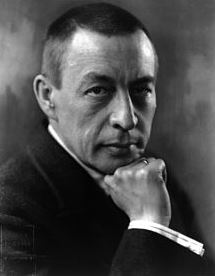
Rachmaninoff's Piano Sonata No. 2 in B-flat minor, Op. 36, is one of his most outstanding works.
First composed in 1907 and revised in 1913, this sonata ,
combines both technical challenge and emotional depth.
Configuration and Features
This sonata is in three movements
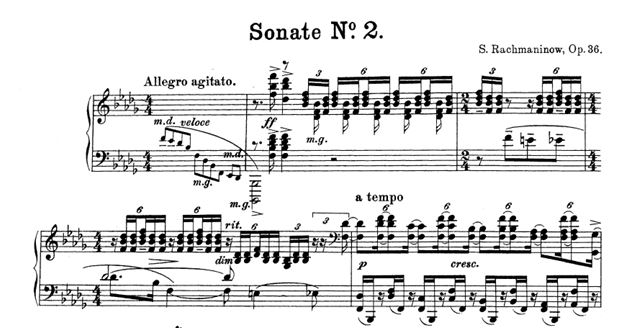
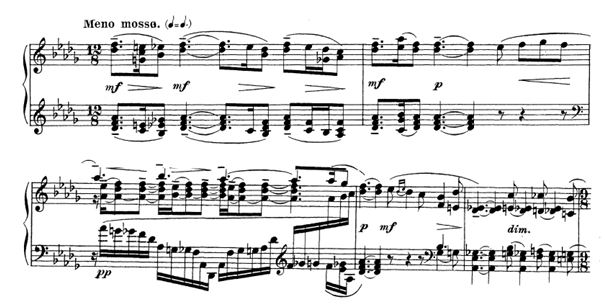
Allegro agitato -
The first movement is characterized by intense energy and dramatic expression.
The open theme alternates with contrasting quiet passages, leading to a dynamic development.
The first movement is typical of Rachmaninoff, with expansive chords,
and cleverly combined counterpoint.
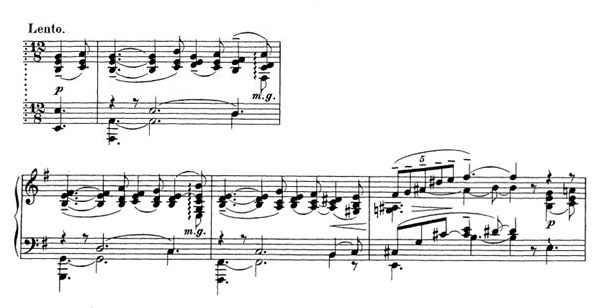
Non allegro - The second movement, as the middle section, is more introspective and lyrical in character.
Here, Rachmaninoff's melodic talent is on full display,
The melody continues to be moist and beautiful.
This movement creates a dreamy atmosphere, inviting the listener into deep contemplation.

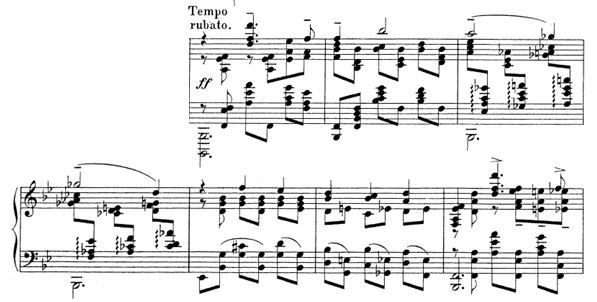
Lento - Allegro molto - The third movement begins with a gentle introduction,
The third movement begins with a gentle introduction, which is followed by a rapid and powerful sonata-form finale.
Here, the theme of the first movement is reproduced to unify the whole.
In the finale, the second theme of the third movement is expanded,
The climax is brilliant and magnificent.
Revisions and Intentions
Rachmaninoff revised this sonata in 1913.
In this revised version, the overall structure was tightened and redundant parts were removed.
Rachmaninoff himself felt that the original version was too verbose,
intended to make the work more compact and focused.
Musical Significance
The Piano Sonata No. 2 represents both a technical challenge and an emotional expression in Rachmaninoff's music.
The sonata demands a high level of skill and a deep understanding of emotion from the performer.
As with all of Rachmaninoff's works,
Sonata No. 2 combines elements of traditional Russian and Western Romantic music.
Evaluation at the time of the announcement and afterwards
Rachmaninoff's Piano Sonata No. 2 was not very popular when it was first published.
At the time of its premiere, it was not understood by many critics and audiences due to its complexity and technical difficulties.
it was not understood by many critics and audiences.
Over time, however, the sonata's musical value was recognized,
It is now an important part of the repertoire for many pianists.
Difficulty of performance
Piano Sonata No. 2 is an extremely challenging work.
Especially in the first movement, there are fast passages and complex rhythms,
The fast passages, complex rhythms, and powerful chords in the first movement in particular place a heavy burden on the performer.
Therefore, at least an advanced level of skill is required to tackle this piece.
Specifically, it is not a substitute for Chopin's Etudes, Liszt's
The level of skill required to play Chopin's etudes and Liszt's superb technical exercises, for example, is high.
Recommended Pianists
As for the pianist who plays this sonata superbly,
Vladimir Horowitz
and Sviatoslav Richter.
Their playing beautifully captures the dramatic elements and deep emotions of Rachmaninoff's music.
Horowitz, in particular, has arranged a version that combines the best of two versions, old and new,
Rachmaninoff's official approval.
Other contemporary pianists such as Yuja Wang and
Daniil Trifonov have also provided excellent interpretations of this sonata.
Conclusion.
Rachmaninoff's Piano Sonata No. 2 represents the pinnacle of his creativity and technique.
This sonata is a mixture of intense energy and deep emotion,
strong impression on both the performer and the audience.
During his lifetime, Rachmaninoff's music was sometimes said to be outdated.
However, Rachmaninoff's music has been loved by many pianists and audiences,
This sonata is a prime example.
It requires a high level of technique and emotional understanding to tackle this sonata, though,
but it is well worth the effort!